Scoliosis
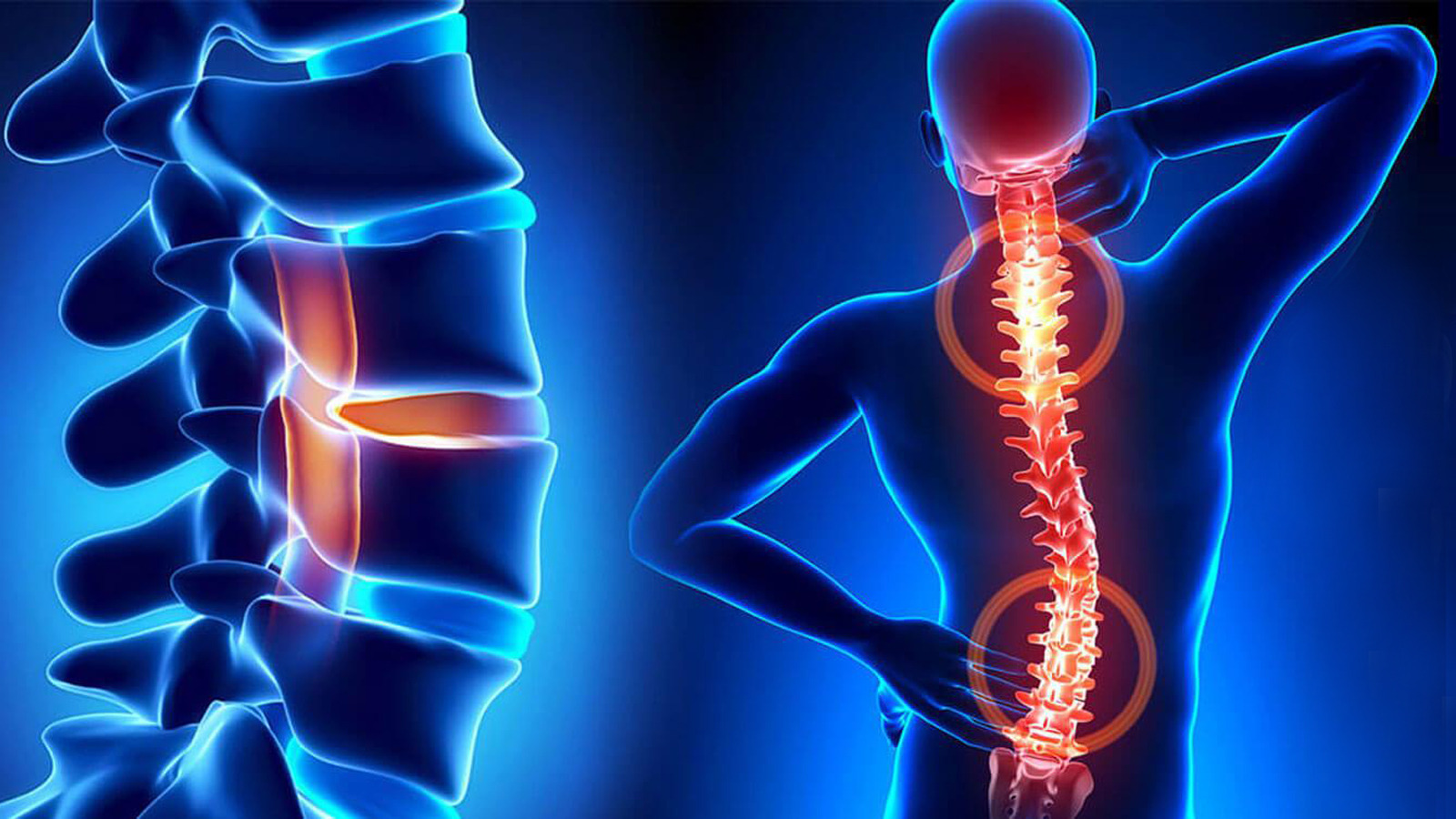
Scoliosis is a condition known as curvature of the spine and is often diagnosed in adolescence. Scoliosis, which develops as a result of tilting of the vertebrae to the right or left or rotating around itself due to different reasons, starts at a young age and can seriously affect the life of the person if not treated.
Scoliosis is the oldest known spinal deformity with an incidence ranging from 0.2% to 6%. It can develop due to various reasons such as trauma and congenital developmental disorders, and the cause of 80% of scoliosis cases is unknown. Usually at the beginning of the development period, it is noticed by the mother and father with findings such as shoulder asymmetry, swelling in a part of the back, and the hips not staying at the same level.
Scoliosis is the curvature of the spine over 10 degrees to the side. In a normal and healthy spine, the vertebrae stretch from top to bottom when viewed from behind, in a straight line in the neck, back and waist regions. In scoliosis, the vertebrae move to the right or left and also rotate around their own axis. For this reason, it is defined as a three-dimensional deformity (deformity).
This disorder, which is common in boys in the preschool period, is 3-5 times more common in adolescent girls, depending on the growth rate. Scoliosis, which does not cause a strong complaint in the early period, is usually detected by school screenings or by chance in x-rays taken for any reason. On the other hand, the disorder in the child's trunk appearance is one of the most important reasons for families to consult a doctor. Symmetry disorders seen in the shoulders, shoulder blades, breast level and waist folds are the first striking findings. This situation may be accompanied by waist and back pain (40-50%). As the degree of curvature increases, respiratory distress (50%) may occur.
* If the person has asymmetry in their waist or back
* One shoulder higher than the other
* When viewed from behind, one scapula is more prominent or prominent than the other
* If one leg looks longer than the other
* If the torso or ribcage seems to be shifted to one side
* Ribs on one side of the trunk stay higher than the other when the person leans forward
* Spinal deformity should be suspected if the clothing is constantly asymmetrical on the individual.
* Congenital scoliosis due to congenital spinal bone structure disorders
* Infantile and juvenile scoliosis that begins in early childhood
* Due to neuromuscular causes, muscular dystrophy etc. scoliosis caused by muscular diseases
* Scoliosis due to connective tissue diseases such as Marfan Syndrome, Ehler Danlos Syndrome
* Scoliosis due to polio, inflammatory diseases and traumas
* Scoliosis due to leg inequality and hip and knee joint problems
Imaging methods are used for grading angular scoliosis. After the imaging method, the curvature of the spine is diagnosed in terms of angle. This method is particularly useful when deciding on the necessity of surgical intervention for scoliosis.
Angles below 10 degrees: This degree, which is called "spinal asymmetry" in medical language, does not have any effect on the health of the person. The curvature must be over 10 degrees for the curvature to be treated. Low-grade curvatures do not pose a risk of scoliosis in the future, and the patient should be examined periodically. The important thing here is to determine whether scoliosis is progressing or not.
The natural course of scoliosis may not always remain the same. Spinal curvature may progress, remain the same, or rarely improve. In two or more consecutive examinations, an increase of 5 degrees or more in the spine in curvatures above 20 degrees, and a 10 degree increase in curvatures below 20 degrees is considered as progress.
Double curvatures, curvatures in the back region, female gender, greater degree of curvature at diagnosis, curvatures diagnosed under the age of 10 tend to progress. For curvatures below 30 degrees, the rate of progression is very low.
Angles between 20 and 40 degrees require close monitoring; Curves of 20 to 40 degrees are more common in adolescence and are considered to be moderate scoliosis. This grade is mostly found as exercise, physical therapy and corset treatment options.
40-degree angles: 40-degree scoliosis curves have largely completed its growth and progression. Back curvature above 45-50 degrees for surgical intervention; The curvature in the waist area should be 40 degrees.
The diagnosis of scoliosis can be determined by examining the child. Asymmetry in the midline can be noticed when viewed from the bare spine. When the child leans forward, bending to one side and the curvature of the ribs are noticeable on the other. This look is called a rip hump (rib pack). This image may be difficult to notice in some cases of "balanced scoliosis".
In the diagnosis of scoliosis, first x-ray film is taken. The aim is to verify the curvature of the spine, to determine its size and location, and to determine whether there is a hereditary disorder of the accompanying bone structure. Scoliosis should be followed up by taking X-rays every six months. On the other hand, other imaging tests such as bone scintigraphy, computed tomography (CT) or magnetic resonance (MR) can be applied to patients with neurological disorders or undergoing surgery.
The diagnosis is easily confirmed by direct radiographs taken with suspicion of scoliosis. Rarely, MRI is required. Since radiological tests are frequently used in the follow-up and diagnosis of scoliosis, care should be taken to protect the ovaries and breasts with lead plates in these children.
Scoliosis curves are defined as major and minor curvatures. The apex (hill) is the place where the curvature is most angled, that is, the vertebrae that rotate the most from the vertical axis and the most distant from the midline. Scoliosis is also named according to the level of the spine where the apex is most prominent. Apex is called cervical scoliosis in the neck region, lumbar scoliosis in the lumbar region, and thoracic scoliosis in the back. Sometimes it can be seen in more than one area at the same time: For example, when it occurs in both the back and waist, it is defined as thoracolumbar scoliosis. Generally, it is more common in the back (thoracic) area.
The form and degree of scoliosis are determined on the graphs. The most commonly used method for this is the Cobb angle. Scoliosis is followed up with the Cobb angle and age of growth and appropriate treatment methods are decided. The Cobb angle is measured with the help of lines drawn on the upper border of the spine where bending begins and the lower border of the spine where bending ends. Perpendiculars drawn on these lines (ie, the angle between the axis of the vertebra where the curvature begins and the axis of the vertebra where the curvature ends).
Scoliosis can rarely regress spontaneously. It is not possible to predict what kind of progress will occur in scoliosis that occurs at the beginning of the growing age. Some studies conducted in recent years show that children with certain gene characteristics may progress. Important follow-up criteria are used to determine the treatment in scoliosis. However, in some cases, progression is frequent and treatment success rates are less. These are;
* High degree of curvature at first diagnosis
* Double curvature in both back and waist
* Neuromuscular coliosis
* Severe contracture and muscle shortness
The treatment will be decided by considering the risk of progression of the curvature of the spine. The treatment methods accepted in the treatment of scoliosis are as follows:
* Monitoring and continuous follow-up
* Corset applications
* Scoliosis exercise and special rehabilitation practices
* Surgical treatment
If there is a Cobb angle below 15 degrees in children who do not start growing, specialist follow-up is generally recommended. Special scoliosis exercises and rehabilitation programs should be continued for those with a Cobb angle of 15-20 degrees. Intensive scoliosis rehabilitation programs should be implemented for children with a Cobb angle over 25 degrees.
When the first signs of growth are seen, namely hair growth, voice change, increase in height, breast development in girls or menstruation is observed, it should be very careful and children should be treated. Since the bending speed and risk are higher in these children, progression risk should be calculated rather than the degree of Cobb angle and treatments should be planned accordingly.
Children with high risk of progression should definitely wear corsets in addition to physiotherapy and rehabilitation applications. Corset treatment should be continued between 16 hours and 23 hours a day, depending on the condition of the growth and the degree of bending, and until the growth is completed.
Surgical treatment can be applied if the Cobb angle is above 50 degrees in individuals with high risk of progression, where the corset treatment is unsuccessful. In scoliosis surgery, the spine is removed with plates and screws in the midline and the curvature is corrected.
EN
-
.jpg) Scoliosis
Prof. Dr. Serdar Akalın
-
.jpeg) Knee Prosthesis
Prof. Dr. Serdar Akalın
-
.jpg) Minimally Invasive Interventions
Prof. Dr. Serdar Akalın
-
.jpg) WHAT IS PRP
Prof. Dr. Serdar Akalın
-
 Hip Prosthesis
Prof. Dr. Serdar Akalın
-
.jpg) Spinal Stenosis ( Spinal Canal Narrowing)
Prof. Dr. Serdar Akalın