.jpg)
Spinal Stenosis ( Spinal Canal Narrowing)
With advancing age, the discs between the vertebrae lose their spongy structure and begin to contain less water. This event causes the disc height to decrease and the hardened disc to bulge towards the spinal canal.
The spinal cord carries nerves that give sensation and strength to the legs. Due to arthritis (destruction of cartilage tissue), the bones and ligaments of the facet joints in the spine thicken and put pressure on the spinal canal. These changes cause the lumbar spinal canal to narrow and this condition is called lumbar stenosis (spinal stenosis).
Spinal stenosis (narrow spinal channel) is the narrowing of the sagittal diameter of the spinal canal through which the spinal cord passes, lateral recesses and foramen (nerve root canals) in the whole of the spinal canal or in one or both vertebrae. It can be congenital or can occur later. The narrow canal in the spine is most common in the waist (lumbar) and neck (cervical) region.
The normal diameter of the lumbar spinal canal is 15-25 mm. The main problem in the narrow canal in the spine is insufficient spinal canal diameter. Sagittal diameter, if less than 10 mm absolute narrowing; Relative narrowing is mentioned between 10-13 mm. A special area called the lateral recess opens into the spinal canal from the inside. This distance should not be less than 3-4 mm. This area is less than 3 mm, suggesting lateral recess narrowing, while less than 2 mm is diagnostic.
Unless structural changes such as age, trauma, thickening of the ligaments in the spine, changes in the joints suppress the nerve structures and fall below the critical level, the narrow canal may not be asymptomatic.
Although the narrow canal in the spine can occur at any age, it often begins to manifest after the age of 50. It is more common in men.
L3, L4, and L5 spine levels are more frequently affected in the lower back. Patients often complain of insidious back, hip, leg and calf pain. Generally, propagation is bilateral. Walking and standing for a long time triggers pain. Since the patients increase the diameter of the spinal canal when they bend forward, they start to walk by leaning forward over time. They get rid of the pain by sitting down. When the disease progresses, sitting and lying cannot relieve the pain. In advanced cases, persistent pain and problems with holding urine and stool may develop. For this reason, urinary incontinence is considered to be an important sign for surgery in patients with a narrow canal in the spine. Patients with this condition are recommended to undergo surgery as soon as possible.
Patients with narrow channels have a very long history of pain, and patients can manage with medication for a while. As the stenosis increases in the spinal canal, the patient almost does not benefit from any treatment. Surgical treatment is recommended for these patients.
Age, latent onset, long-term history and bilateral involvement usually distinguish the narrow channel from other spinal pathologies. Lumbar hernias are usually seen in younger people. Pain distribution is mostly unilateral and neurological (nerve compression) findings are high.
4-way x-rays, computed tomography and MRI are used in the diagnosis of the narrow canal. 80% of these patients can show findings in electro-diagnostic tests (EMG). These tests can also show more accurately the areas where the press is planned to be eliminated.
Lumbar stenosis may not always cause complaints in the person. However, pain or loss of sensation in the back; pain, cramping, numbness in the legs, weakness; complaints such as urinary incontinence may also be experienced.
Complaints may increase due to prolonged sitting or standing. Existing complaints may come and go and continue with varying intensity over time.
Since leaning forward or sitting will increase the diameter of the spinal canal, it may reduce or completely disappear the pain.
The most typical complaints of the patients are weakness, sensation changes, numbness-tingling in the legs after walking a certain distance and the legs become almost unable to take a step.
In this case, patients definitely look for a place to sit. Sitting down, bending forward a little, strength is restored to the legs and they begin to walk again. However, after a certain distance, the complaints recur and the need to sit again arises.
How Is Lumbar Stenosis Diagnosed?
First of all, you should give detailed information about your complaints to your doctor's questions. Narrowed disc spaces or thickened facet joints can be viewed by taking X-rays.
Thanks to magnetic resonance imaging (MRI), information about the stenosis in the spinal canal and the compression of the spinal cord can be obtained in great detail. Computed tomography (CT) or lumbar myelogram can likewise be used to obtain detailed images.
Each of these studies can provide information about the presence, location, and severity of spinal canal stenosis and nerve root compression.
What are the Treatment Methods for Lumbar Stenosis?
After your doctor diagnoses lumbar stenosis causing pain, he will first try non-surgical treatments.
What Are Non-Surgical Treatment Methods in Lumbar Stenosis?
Non-surgical treatments in the lumbar stenosis include anti-inflammatory drugs or pain relievers that reduce inflammation. Physical therapy can also be considered to facilitate your daily activities by maintaining and increasing your flexibility, strength and fitness. Spinal injections (epidural cortisone injections) may also be recommended.
Medication Method in Lumbar Stenosis
One or more medications may be prescribed by your doctor to reduce discomfort symptoms and complaints and increase your mobility. Drugs used in pain control are called analgesics. In most cases, the pain responds to commonly used (over the counter) pain relievers such as aspirin or acetaminophen.
Some analgesics called non-steroidal anti-inflammatory drugs (NSAIDs) can be added to control irritation and inflammation that may occur. Among these, there are various prescription drugs with the active ingredients ibuprofen, naproxen.
If your doctor prescribes pain relievers or anti-inflammatory medications, you should watch out for side effects such as stomach upset or bleeding. You should be followed up by your doctor in terms of problems that may arise from long-term use of prescription or over-the-counter pain relievers and NSAIDs.
If you have severe and persistent pain that does not benefit from other analgesics or NSAIDs, your doctor may also prescribe narcotic analgesics (such as codeine) for a short time. You should only use the recommended amount of medication. Taking a higher dose will not speed up your recovery.
High-dose drug use can cause nausea, constipation, dizziness and imbalance, and its use may cause addiction. All medicines should be taken only as described. Tell your doctor about any medications you use (including those bought without a prescription) and if he or she has prescribed pain medications, and if you have used them before, tell them if they have worked for you and the side effects they have caused.
There are other drugs that have anti-inflammatory effects. Corticosteroid drugs (in the form of tablets or needles) are sometimes prescribed for very severe back and leg pain because of their strong anti-inflammatory effects. Corticosteroids, like NSAIDs, can have side effects. You should discuss the benefits and risks of these medications with your doctor.
Selective spinal injections or "blocks" can be used to relieve very severe pain. These are corticosteroid injections into the epidural space (space around the spinal nerves) or facet joints by a doctor trained in this technique.
Depending on the response, the first injection may be supplemented at a later date with one or two injections. These are usually done within a rehabilitation and treatment program.
People with lumbar stenosis often avoid activities. This can lead to decreased mobility, flexibility, strength and cardiovascular fitness. This condition can be improved with a physical therapy or exercise program.
Physical therapy and exercise program usually starts with stretching exercises to make the tense muscles flexible again. You may be asked to repeat stretching exercises frequently to maintain your flexibility.
Cardiovascular exercises such as fitness bikes, treadmills, swimming can be added to the program to increase the condition and improve the blood circulation in the nerves. Increased blood flow in the nerves can reduce some narrow channel complaints. In addition, exercises to strengthen the back, abdominal and leg muscles can be given.
If your flexibility, strength and condition are maintained and increased, your daily activities will become easier. Your physiotherapist or doctor can tell you that you will add a continuous exercise program to your life by using simple equipment at home or going to a fitness center.
Home modifications and home safety are important for some people with lumbar stenosis. Household appliances such as washing machines may need to be placed in more useful places. A bedside table may be useful next to the bed.
If necessary, safety devices that prevent falling in the bathroom are also recommended. Plans for preparing meals, scheduling activities and saving work should be reviewed. It is important that the necessary instruments such as walking sticks or walkers fit the patient properly.
Unless significant or increased weakness in the legs, bowel and bladder control problems occur, the presence of a narrow channel does not create a dangerous situation in adults. Therefore, the aim of treatment is to reduce pain and increase the patient's functionality.
Nonsurgical treatments do not correct the narrowing of the spinal canal, but provide long-term pain control and increased functionality without the need for surgery. A participatory rehabilitation program requires supervised treatment for three months or more.
In lumbar stenosis patients, surgery is recommended for patients whose pain and complaints cannot be relieved by non-surgical treatment methods and whose functions such as walking and moving are seriously impaired.
Surgical treatment in lumbar stenosis patients is also applied to people with progressive leg weakness or bladder and bowel control problems. At the same time, surgical treatment can be considered as a good option in patients whose walking distance is shorter and whose quality of life is low.
Rehabilitation support should also be obtained in order to make the transition to daily life more comfortable after the operation.
Lumbar-narrow-canal In cases of narrow canal, sometimes the vertebrae may have slipped over each other (spondylolisthesis). In some cases, scoliosis (lateral curvature) may have developed in the lower back. In this case, abnormal movements (instability) can be seen between the vertebrae.
In such cases, in addition to decompression surgery, spinal fusion surgery can also be performed to detect the relevant vertebrae. It can be made by placing bone fragments, bone-like materials or metal tools (instrumentation) between the relevant vertebrae to be determined by fusion.
Fusion can be done using an anterior or posterior approach, or both approaches. The choice of approach (anterior / posterior) in fusion surgery is determined by many technical factors such as the need to remove the bony protrusions, the location of the protrusions, anatomical differences between patients, and the degree of instability.
In most of the lumbar stenosis patients, the pain decreases after the surgery and a significant improvement and increase in all activities is observed 6 to 9 months after the operation. In order to return to daily activities and a normal life, a rehabilitation program is usually started after surgery.
You can contact Prof. Dr. Serdar AKALIN or our clinic for more detailed information about Spinal stenosis with 30 years of experience in spinal surgery.
EN
-
.jpg) Scoliosis
Prof. Dr. Serdar Akalın
-
.jpeg) Knee Prosthesis
Prof. Dr. Serdar Akalın
-
.jpg) Minimally Invasive Interventions
Prof. Dr. Serdar Akalın
-
.jpg) WHAT IS PRP
Prof. Dr. Serdar Akalın
-
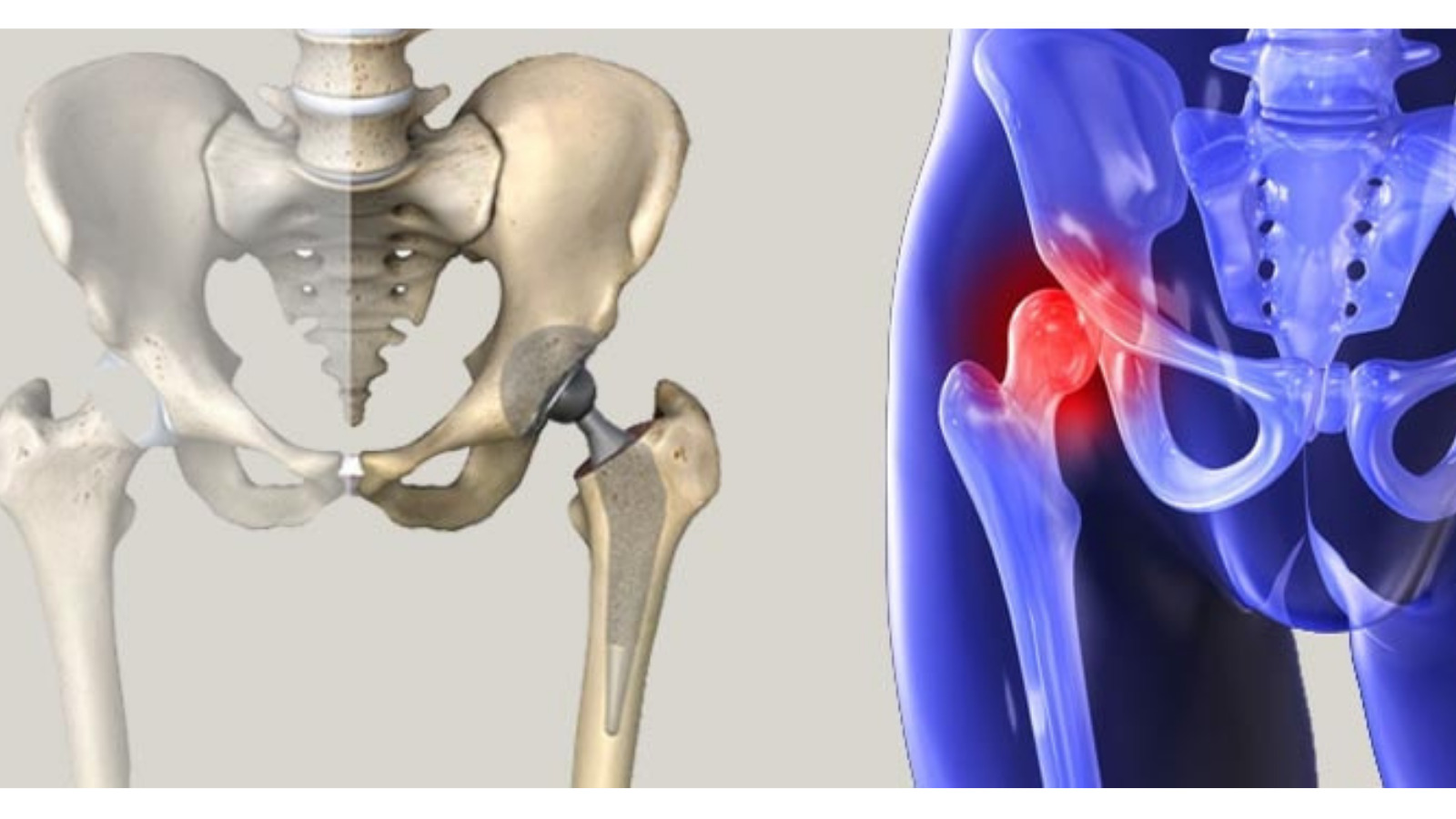 Hip Prosthesis
Prof. Dr. Serdar Akalın
-
Spinal Stenosis ( Spinal Canal Narrowing)
Prof. Dr. Serdar Akalın